

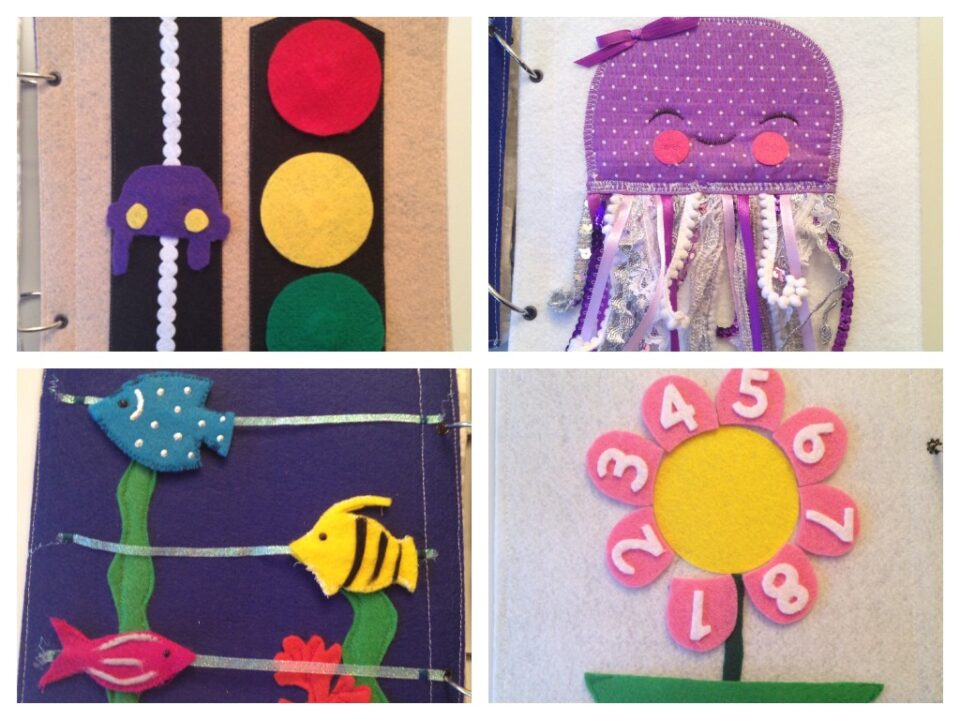
Montessori education, developed by Dr. Maria Montessori, emphasizes hands-on, self-directed learning and collaborative play. Montessori-inspired toys are designed to support a child’s natural development and encourage independence, creativity, and critical thinking. Among these toys, busy books stand out as an excellent choice for 2-year-olds. These interactive and educational books provide numerous benefits that align with Montessori principles. Here’s why busy books are ideal for 2-year-olds.
- Promote Independence and Self-Directed Learning
Explanation: Busy books are designed to encourage independent play. Each page offers a variety of activities that children can explore and complete on their own. This fosters a sense of autonomy and boosts self-confidence as children learn to rely on themselves.
Example: A busy book page with zippers and buttons allows a child to practice these skills independently, helping them develop self-care abilities like dressing themselves.
- Enhance Fine Motor Skills
Explanation: Busy books are filled with activities that require precise hand movements. These activities help to strengthen the small muscles in the hands and fingers, which are crucial for tasks such as writing and using utensils.
Example: Tasks like tying shoelaces, snapping buttons, and threading beads on a busy book page help enhance fine motor skills.
- Support Cognitive Development
Explanation: Busy books christening gifts often include puzzles, matching games, and sequencing activities that challenge a child’s cognitive abilities. These activities stimulate thinking, problem-solving, and memory skills.
Example: A page with different shapes and corresponding slots encourages a child to match each shape correctly, promoting spatial awareness and problem-solving skills.
- Encourage Sensory Exploration
Explanation: Busy books provide a multi-sensory experience, engaging children’s sense of touch, sight, and sometimes even sound. This sensory exploration is vital for brain development and helps children understand the world around them.
Example: A busy book page with various textures, such as soft felt, rough sandpaper, and smooth satin, allows children to explore different tactile sensations.
- Foster Creativity and Imagination
Explanation: The open-ended nature of busy books encourages children to use their imagination. They can create stories, role-play scenarios, and invent new uses for the book’s elements.
Example: A busy book page designed as a miniature kitchen allows children to pretend they are cooking, fostering imaginative play and creativity.
- Develop Concentration and Focus
Explanation: Busy books require children to focus on specific tasks, promoting sustained attention and concentration. These skills are crucial for academic success and everyday activities.
Example: A child concentrating on lacing a string through a series of holes on a busy book page is practicing focus and patience.
- Safe and Child-Friendly
Explanation: Busy books are typically made from soft, non-toxic materials, ensuring they are safe for young children. The absence of small, detachable parts reduces the risk of choking hazards.
Example: A busy book made from felt with securely stitched components provides a safe play environment for a 2-year-old.
- Portable and Convenient
Explanation: Busy books are lightweight and easy to carry, making them perfect for on-the-go entertainment. They can be used in various settings, such as during travel, in waiting rooms, or at restaurants.
Example: A busy book can be packed in a diaper bag and used to keep a child entertained during a long car ride or flight.
- Customizable and Personal
Explanation: Busy books can be tailored to a child’s interests and developmental needs, making them unique and personalized gifts. This customization adds an extra layer of engagement and enjoyment.
Example: A busy book themed around a child’s favorite animals or colors can capture their interest and make playtime more enjoyable.
- Eco-Friendly Option
Explanation: Many busy books are made from sustainable materials, offering an eco-friendly alternative to plastic toys. This aligns with the Montessori principle of teaching children to respect and care for their environment.
Example: A busy book made from organic cotton or recycled felt materials promotes sustainable practices and reduces environmental impact.
- Encourage Social Interaction
Explanation: Busy books can also be used as a tool for social interaction and collaborative play. Parents, caregivers, or peers can join in the activities, fostering communication and teamwork.
Example: A parent and child can work together on a busy book page that involves storytelling or matching activities, enhancing their bond and communication skills.
- Durable and Long-Lasting
Explanation: Handmade busy books are typically crafted with care and high-quality materials, ensuring they are durable and able to withstand the rigors of toddler play.
Example: A busy book with sturdy stitching and robust fabric pages can endure rough handling and last for years, becoming a cherished keepsake.
Conclusion
Busy books are an excellent choice for 2-year-olds, providing a wealth of benefits that align with Montessori principles. They promote independence, enhance fine motor skills, support cognitive development, and encourage sensory exploration. Additionally, busy books foster creativity, concentration, and social interaction, while being safe, portable, and eco-friendly. Their durability and customizable nature make them a valuable and lasting addition to any child’s toy collection.
Summary
Busy books are ideal for 2-year-olds because they:
- Promote independence and self-directed learning
- Enhance fine motor skills
- Support cognitive development
- Encourage sensory exploration
- Foster creativity and imagination
- Develop concentration and focus
- Are safe and child-friendly
- Are portable and convenient
- Are customizable and personal
- Offer an eco-friendly option
- Encourage social interaction
- Are durable and long-lasting
By incorporating busy books into a child’s playtime, parents and caregivers can provide a rich, educational experience that supports holistic development and aligns with Montessori principles.
